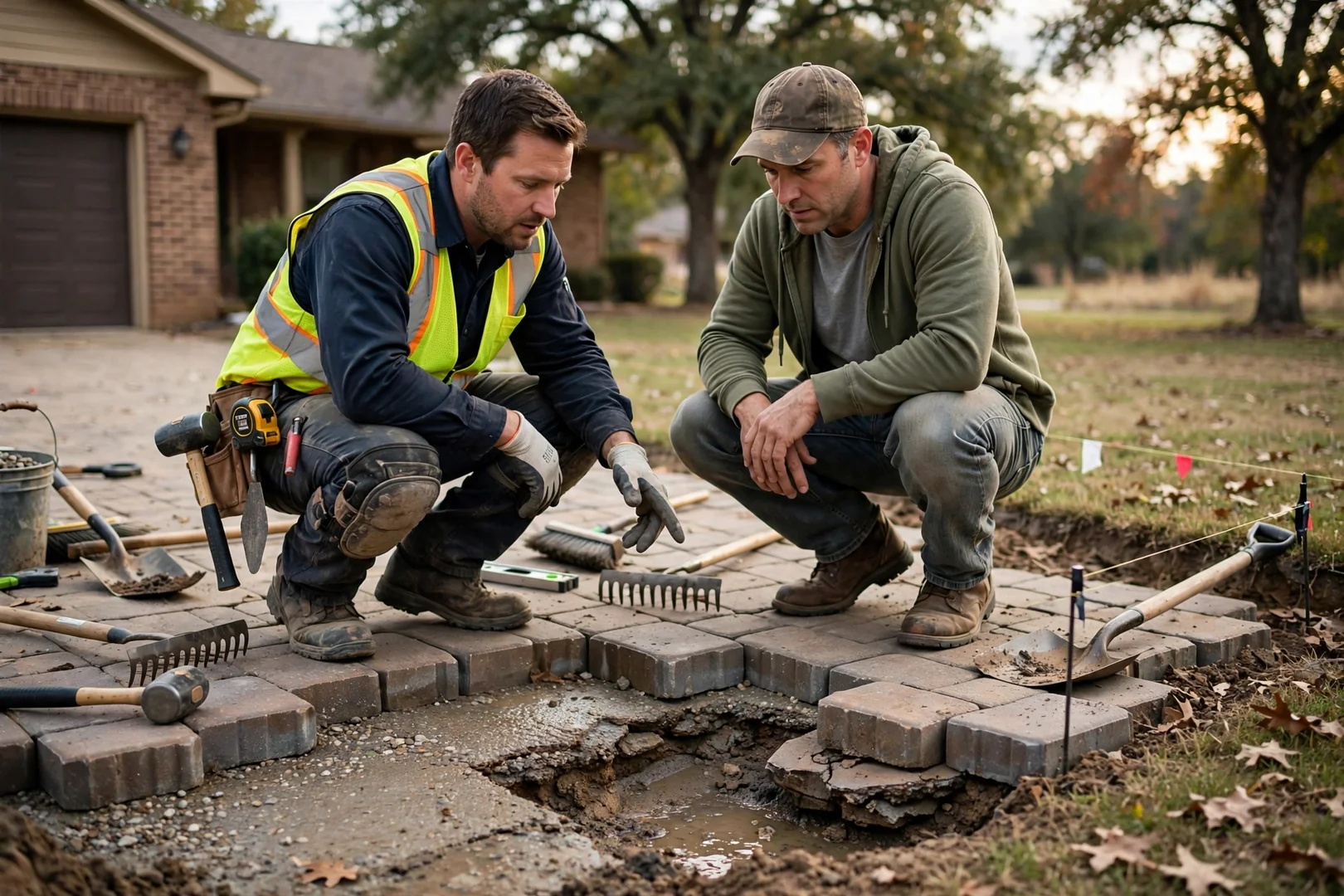

Heaving and Cracked Concrete
Expansive clay soil swells and shrinks with moisture swings, lifting slab sections and creating trip-hazard cracks. Interlocking pavers flex with minor movement instead of breaking.
Installing a paver driveway replaces a failing concrete or asphalt surface with interlocking pavers set over a compacted aggregate base. It suits Norman homeowners dealing with heaving slabs, washouts, or a worn entry. Red clay soils around Norman swell when wet and shrink in drought, which is why base depth and edge restraints matter so much on local properties.
Planning ahead helps. Spring and fall 2026 are strong windows for excavation and polymeric sand curing, and Norman Paver Installation Specialists handles each driveway from the initial site evaluation through final plate compaction and a post-job walkthrough.
Request a Written Estimate 405-703-5381Paver Driveway Service Overview
Paver Driveway Installation is the process of excavating a driveway area, building an engineered base of compacted crushed stone and bedding sand, and laying interlocking concrete pavers rated for vehicle loads, and at Norman Paver Installation Specialists it includes site evaluation, drainage correction, and joint sanding across Norman properties. Our crews start by checking subgrade conditions and slope, since poor drainage and expansive clay cause most of the driveway failures we diagnose. Where soil is weak, we add geotextile fabric, compact the base in lifts with a plate compactor, and screed a level bedding layer before setting a herringbone pattern that resists shifting under tires. Edges get locked in. Residential driveways, commercial entries, and multi-unit parking areas each receive a written estimate explaining base depth and paver thickness choices. For 2026 projects, we schedule around Oklahoma freeze-thaw cycles and storm season so polymeric sand can cure properly.
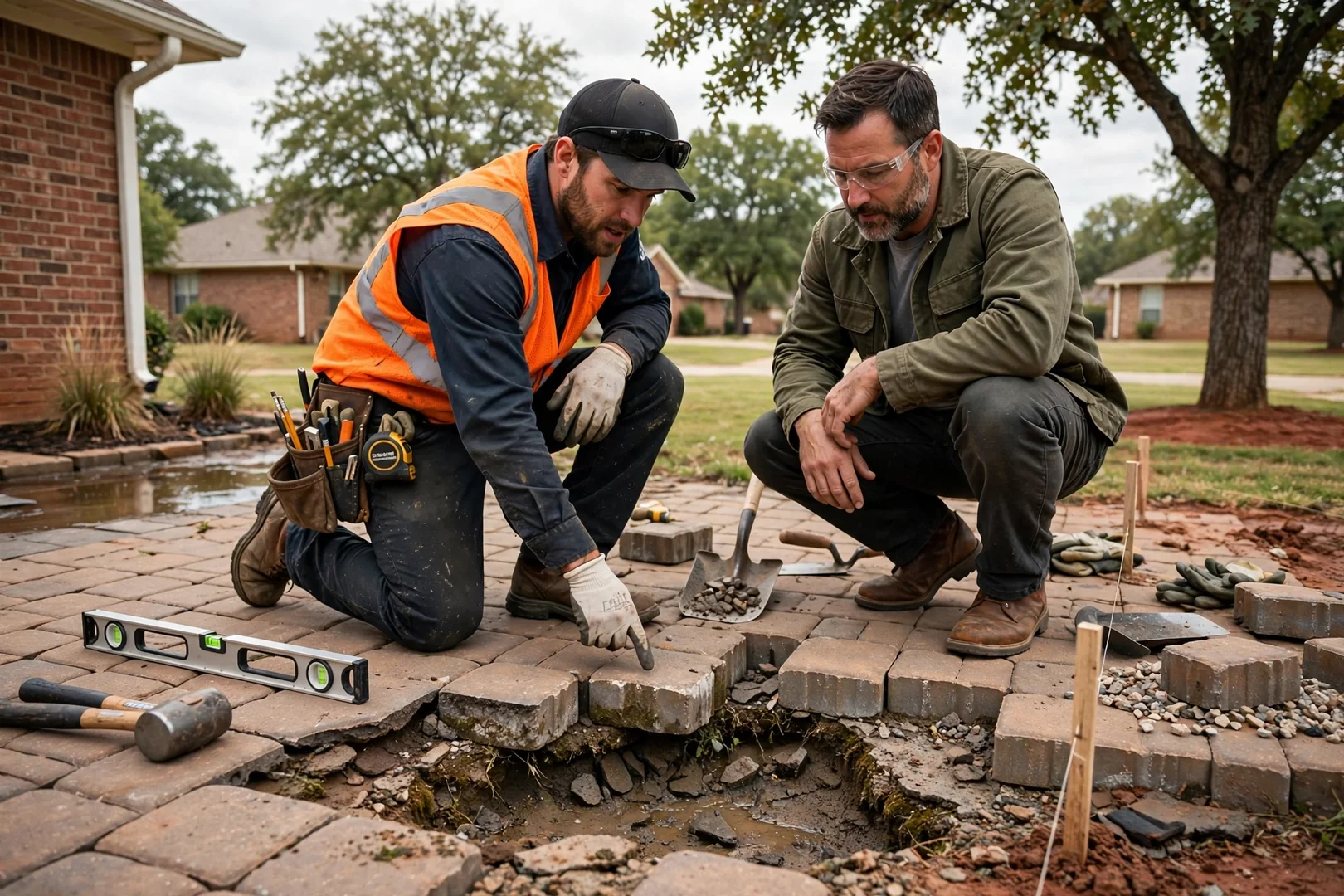
- Signs You Need a New Driveway -
Cracked slabs, pooling water, and sinking edges usually mean a Norman driveway is ready for paver replacement. Expansive clay heaves concrete. Poor slope causes ponding and erosion. Spring storms in 2026 expose these failures quickly, and a properly based paver driveway resolves them.
Click Me to Call: 405-703-5381Expansive clay soil swells and shrinks with moisture swings, lifting slab sections and creating trip-hazard cracks. Interlocking pavers flex with minor movement instead of breaking.
Flat or reverse slope sends runoff toward the garage or foundation, leaving ponding and base erosion. A regraded base with proper pitch directs water away.
Driveways without edge restraints spread and settle along the borders, especially where tires ride the edge. Installed restraints keep the paver field locked tight.
Questions About Paver Driveways
Homeowners planning a new driveway in 2026 tend to ask the same practical questions about timing, preparation, and how a paver surface holds up under daily vehicle traffic.
The answers below focus on paver driveway installation for Norman properties, including local soil and weather considerations. Each one is meant to help you plan with confidence before your on-site evaluation.
Booking well ahead of your preferred window is the best approach, because spring and fall are the most popular seasons for driveway excavation and base compaction in Norman. Those months usually offer workable soil moisture and mild temperatures. Early planning also gives time to confirm any HOA or city requirements before work begins.
A typical paver driveway installation includes site evaluation, removal of the old surface, excavation, a compacted aggregate base, a screeded bedding sand layer, paver placement, edge restraints, and polymeric sand jointing. Drainage details such as proper slope away from the garage are planned during layout. Your written estimate spells out each item so nothing is assumed.
You will need to park vehicles on the street or elsewhere for the full project, and the driveway should stay clear of cars until the pavers are compacted and the joint sand has set. Marking sprinkler heads, low-voltage lighting, and pet fences helps protect them during excavation. Clear access for equipment makes the days go smoother.
A paver driveway usually costs more upfront than poured concrete, but individual interlocking pavers can be lifted and reset if a section settles, which often reduces long-term repair costs. Concrete slabs tend to crack and require patching or full replacement. Pricing depends on square footage, base depth, and paver selection.
A properly built paver driveway handles Norman’s expansive clay soil and freeze-thaw cycles well because the segmented surface flexes instead of cracking. The key is a deep, compacted aggregate base, often paired with geotextile fabric, to limit soil movement and rutting. For 2026 projects, we evaluate drainage and subgrade conditions on every site before recommending a base depth.
Paver Driveway Cost Factors
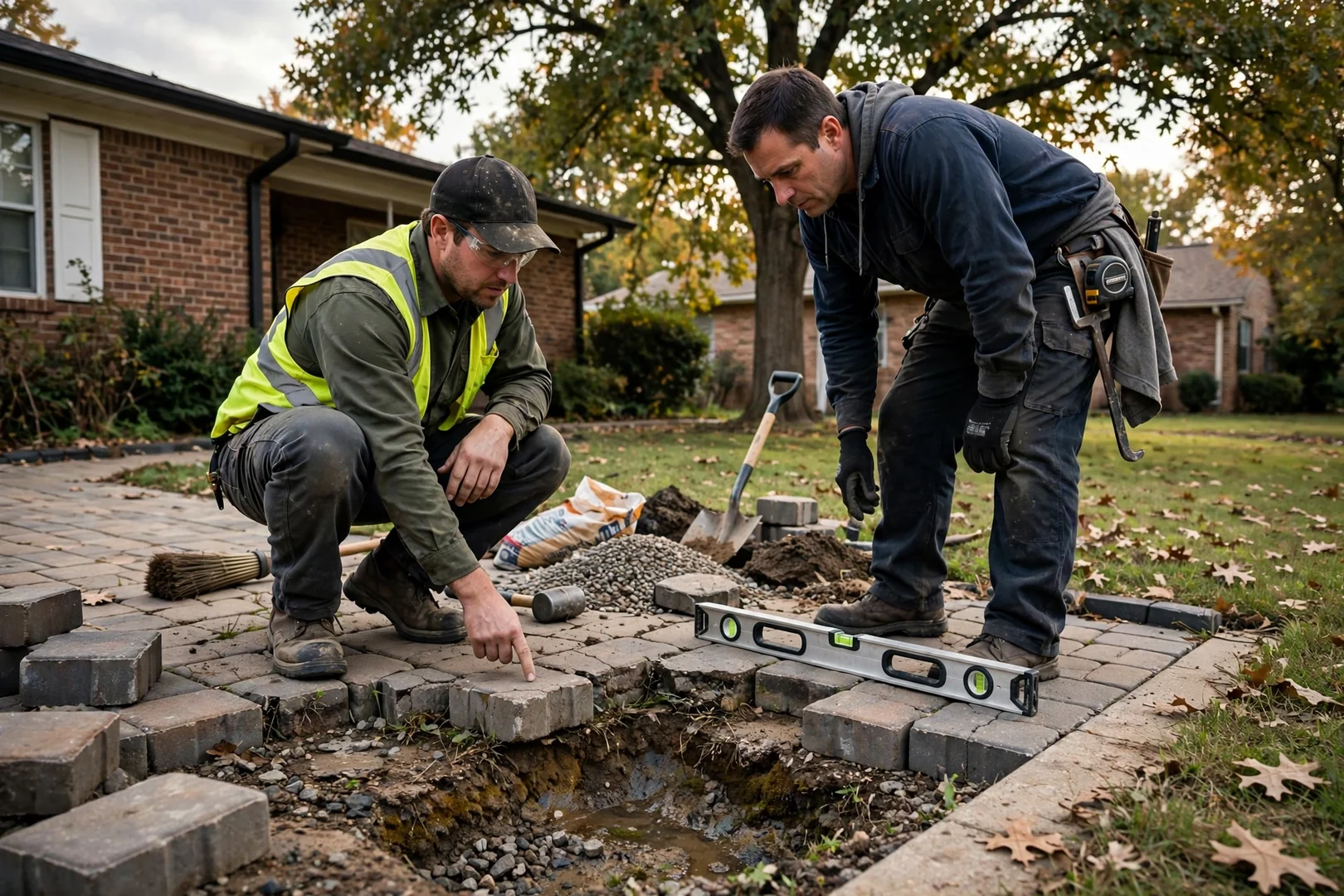
Paver driveway installation pricing in Norman depends primarily on driveway square footage, excavation depth, base material requirements, and the paver style you choose, with 2026 projects priced individually after a site visit. Removing an existing concrete or asphalt slab adds demolition and haul-off costs. Base depth matters most. Driveways carry vehicle loads, so they typically need a thicker compacted aggregate base and sometimes geotextile fabric over Norman’s expansive red clay, and those materials shape the budget. Paver thickness and laying pattern also play a part, since vehicular-rated pavers and herringbone layouts require more material and precise cutting. Edge restraints, drainage corrections such as regrading or channel drains, and polymeric sand jointing round out the main line items. Exact pricing requires an on-site assessment, so we provide free written estimates that itemize each of these factors before any work begins.
Paver Driveway Installation Process
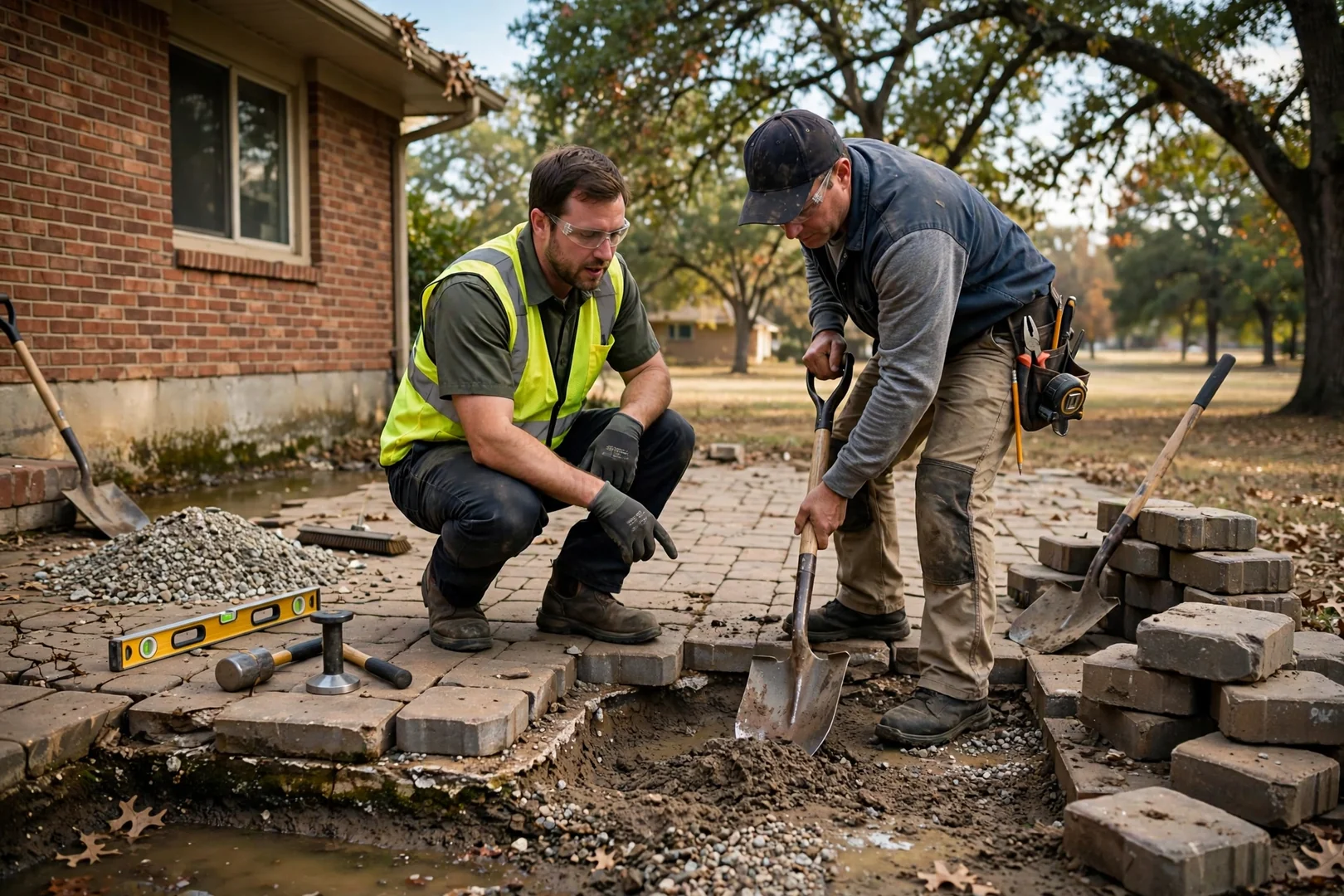
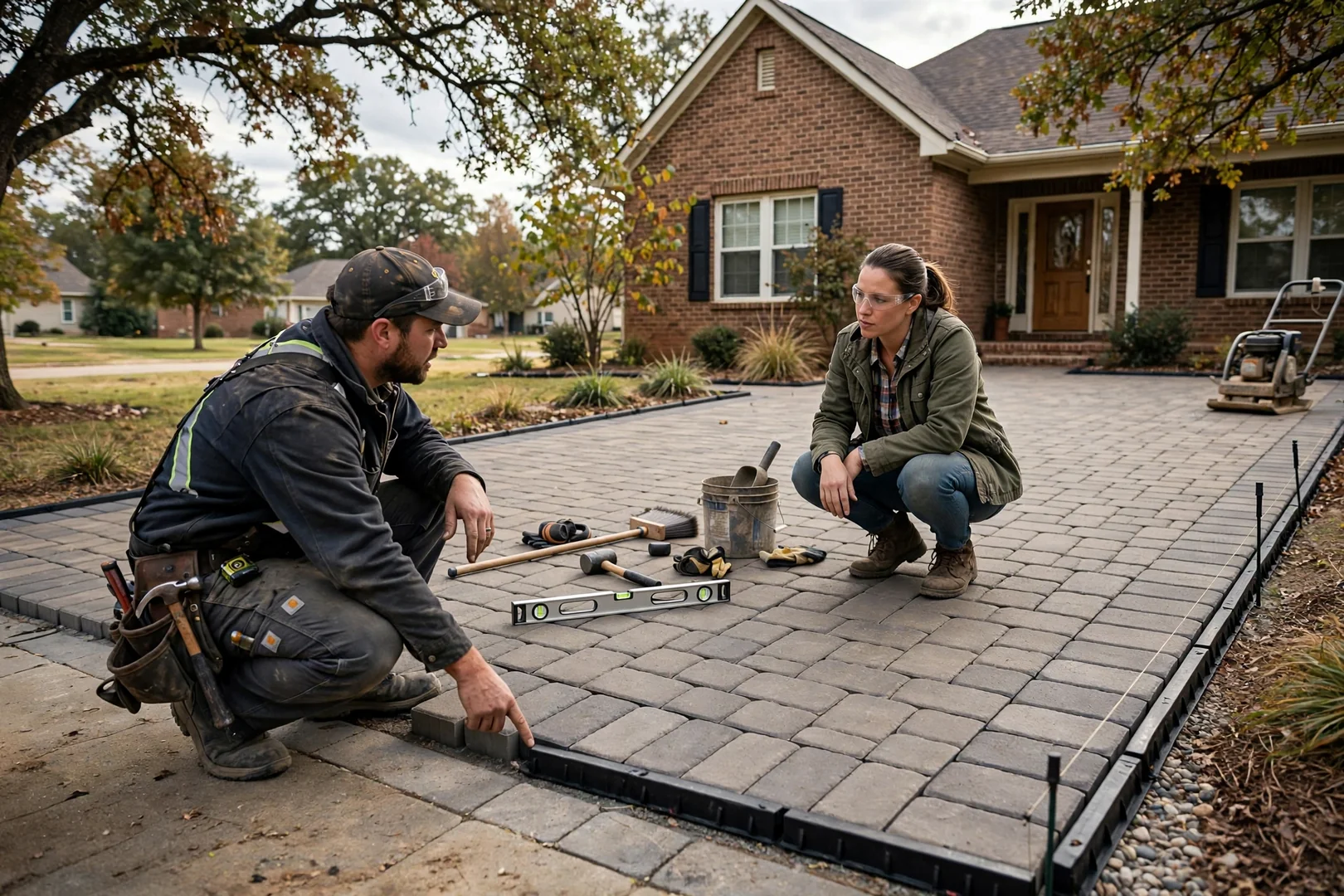
Every Norman driveway project starts with an inspection of soil conditions, existing drainage, and slope away from the garage. We check for signs of clay movement or standing water. Then we mark the layout, confirm paver selection, and provide a written estimate for your 2026 project.
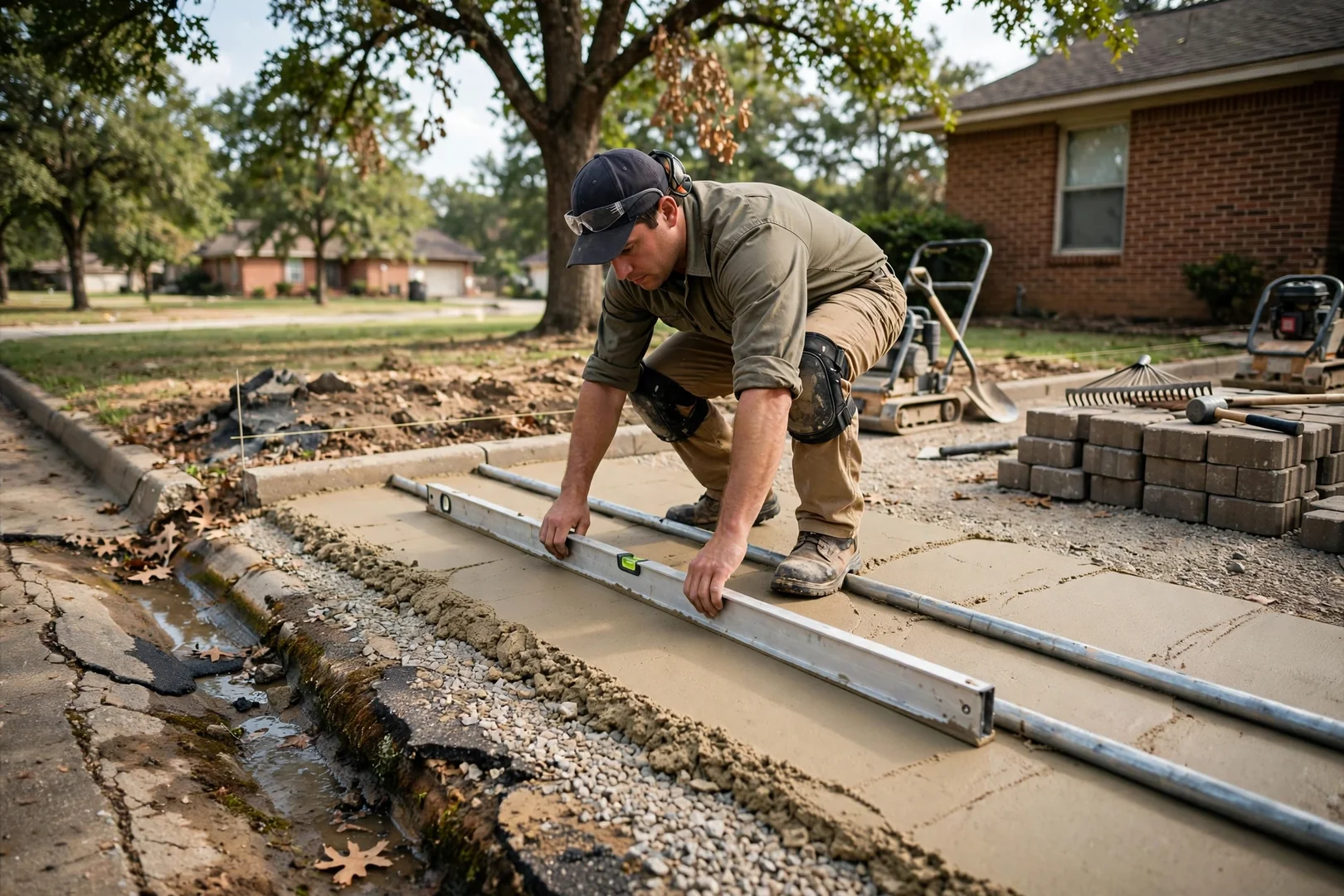
The old surface is removed and the subgrade is excavated to a depth suited for vehicle loads. Geotextile fabric is added where needed. Crushed aggregate is then placed in lifts and compacted with a plate compactor, followed by a screeded bedding sand layer.
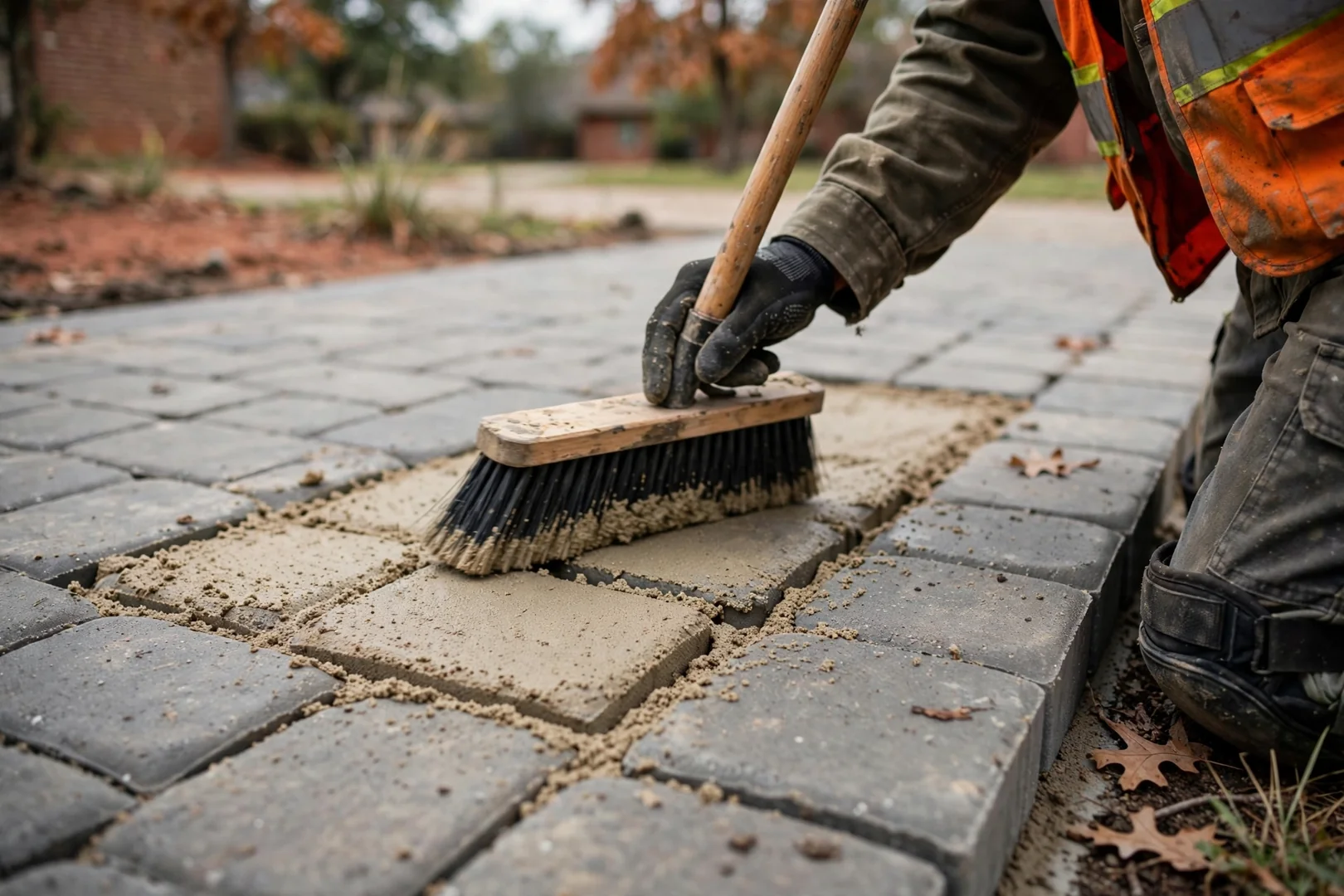
Pavers are laid in the chosen pattern, cut along borders, and secured with edge restraints. Polymeric sand fills the joints after final compaction. We finish with a post-job walkthrough to review the surface, drainage, and simple care steps.
// Proven Driveway Paver Results //
// Free Paver Driveway Estimates //